Showing posts with label Fyodor Dostoevsky. Show all posts

Friday, September 6, 2013

Thoughts on John Maus and (Black) Experimental Music

(This post is an unsolicited continuation of Rory Ferreira (AKA milo)’s letter published earlier this summer over at Impose)
"And my sense of rhythm acts like a force field/ protecting me from you or you from me (tone it down driver!)/ what's that in your gun holster? oh this, its the de-negritizer/ I shoot myself with it until I'm whiter than Peter Piper/ now I'll be able to bow before our world leader's might or/ tell them that the shackles on my Adidas sneakers need to be tighter/ 'cause right now man, I'm free like a zebra in Zaire/ so I'll hop in a time machine and have my lineage wiped clean/ and I'll entertain yuppies as they buy tight jeans and Thai cuisine" —Busdriver as featured on milo's "the gus haynes cribbage league"
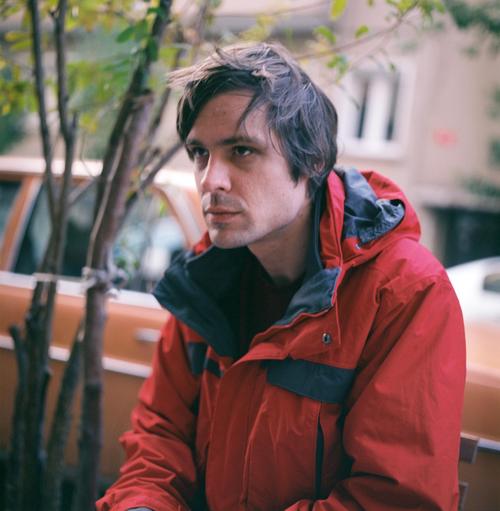
John Maus
_________________________________________

Synth-pop musician John Maus has an agenda. He is knowledgeable about experimental classical music (Arnold Schoenberg, John Cage etc.) but is also steeped in continental philosophy—he holds a degree from the European Graduate School. His decision to work in the pop-music idiom is informed by his philosophical training: “I take seriously this claim of Gilles Deleuze… that perhaps it’s our task as artists to make intensive use of a major language.” Maus considers pop to be both a major language and something of a singularity within music history because it for the most part does without thematic development and major/minor tonality- the staples of western music, which is to say that now both “experimental” music and pop music have cast aside musical conventions and, as such, either might be an exemplary idiom for a political radical to be working within. A great pop performance leads to a sense of atavistic recognition between audience and performer, while experimental music becomes a contest in elitist one-upsmanship. In other words if you want to express yourself, write a three chord anthem, not a twelve-tone row. I’m not persuaded by this argument, partially for the same reason as milo: it disregards black music.

The Art Ensemble of Chicago
When John Maus talks about experimental music and conflates it with elitism, he is speaking exclusively about white classical composers. Avant-Garde jazz groups like the Art Ensemble of Chicago and the Sun Ra Arkestra are coming from a similar place as Maus but create better, more politically dangerous music; his argument seems to hinge upon an ignorance of experimental black musicians. Both the Art Ensemble and the Arkestra play music that expresses black consciousness and identity, and the volatility therein. The Art Ensemble’s catch phrase is “Ancient to the Future”; often on stage some members would wear tribal war paint while trumpeter Lester Bowie wore a lab coat. Their work contains the entire spectrum of African Diaspora musics, rock elements and the clatter of found percussion instruments, all subservient to the purgatorial wail of the blues. This melting pot aesthetic doesn’t lead to an atavistic music, where distinctions between white and black experience fall away. The breaking down of musical and cultural boundaries in search of an underlying unity ends with the abortive and sneering conclusion that existence itself is a boundary; the Art Ensemble’s mastery of jazz, classical, rhythm & blues and Caribbean styles expresses with claustrophobic intensity the terror of black American experience in the present (I’m writing primarily about the Ensemble’s hey-day in the 70’s and 80’s). The group’s presentation is simultaneously an homage to and mockery of History, their sound an orgy of overblown saxophones, speechlike trumpet and jocular drums. Instead of providing a release from the present (negro spirituals come to mind), the Art Ensemble of Chicago celebrates the present in all its ugliness, and what a perverse celebration it is.

While the Art Ensemble translated the collapse of history and linear progress into music, Sun Ra was more whimsical. He famously claimed to be an angel from Saturn; in his own words:
“I realize that people got feelings, and I reach toward their feelings, not their minds. Because they’ve been brain-washed. Why should I try to reach something that’s brain-washed? But their spirit hasn’t been brain-washed… I’m really not a man, you see, I’m an angel. If I was a man, you see, I couldn’t do anything, because man always fails you know, he’s so limited… I use my music as a sound-bridge for them to walk across the void.”
Sun Ra
During Ra’s lifetime, Arkestra (an approximation of the ebonic pronunciation of ‘orchestra’) members lived together, abandoning their families in order to pursue music. Sun Ra was a radical and a futurist (he was one of the very early proponents of synthesizers), a man of the people and a recluse. He was very much aware that he was considered a novelty by many music fans, but was apathetic towards his reception. His music often implored people, black people in particular, to face the realities of their situation; he demanded this but deflected questions of progress and action because he was just a concerned interstellar agent. Like the Art Ensemble, the Sun Ra Arkestra’s wild sound reproduced the crisis of black identity. Whereas John Maus makes use of a “major language”- pop music- in order to be seen, Sun Ra and the Art Ensemble make vigorous use of experimental languages in order to give life’s ambiguity and distortion full scope.

We like noise-rap crew Death Grips a lot here at the Spook (check out Owen’s post on them here). Their music and career arc shed light on how experimental music functions in society. First, it is important to recognize that Death Grips is a continuation of experimental rock drummer Zach Hill’s oeuvre (that is, they were never seeking mainstream acceptance or success). Infamously, the band was dropped from Epic Records after they leaked their album No Love Deep Web, which Epic financed, directly prior to the official release date. The cover was, fittingly, a picture of Zach Hill’s penis with “No Love Deep Web” written on it in sharpie.

MC Ride and Zach Hill
In Jean Baudrillard’s The Agony of Power, he distinguishes between two modalities of power: domination and hegemony. Domination is characterized by interpersonal antagonism and exploitation. In hegemony, which historically can be seen as domination’s final phase, the connection between human intent and power disappears. What emerges is a network of complicity; critical thought no longer targets sectors of power but uncovers ways in which works, movements and values collude with global capitalism. The “negative” thought of the Hegelian slave or Dostoevskian Underground Man might persist, but it is rendered impotent and by the virtue of its impotence is complicit with hegemony. MC Ride’s lyrics embody Baudrillard’s polemical intensity. On “Come Up and Get Me”, the title proves to be more of a plea than a provocation:
My stone wall it's on dog gaze duct taped to the ceiling/ Stucco cave make me illi okay, okay feel me/ I'm in an eight high abandoned building/ No daylight one midnight lamp lit twenty-four seven/ Murdered out windows two exits/ Street or nosedive to the next life in seconds/ and suicide ain't my stallion/ So I'm surrounded…I'm epiphanic amnesia

Baudrillard writes:
“A bitter truth: Radicalness is on the side of the intelligence of evil… we must look to the side of evil for the clearest indications, the harshest reality. Only those who show no concern for contradiction or critical consideration in their acts and discourse can… shed full light on… the absurd and extravagant character of the state of things, through the play of objective irony."

“For us…the continuity of history is shattered; we live in an instant and disincarnate currentness in which we take no more trouble… than to prolong history or rather the end of history, immersed in the euphoric banality that Heidegger called the second Fall of humanity.”

“Globalization automatically entails…fragmentation and deepening discrimination-and our fate is for a universe that no longer has anything universal about it-fragmentary and fractal-but that no doubt leaves the field free for all singularities: the worst and the best, the most violent and the most poetic.”
Jean Baudrillard
MC Ride’s lyrical content deals with these dark topics (for instance, the euphoric banality of voracious drug consumption and sex on tracks like “Spread Eagle Cross the Block” and “I Want it I Need it (Death Heated)”), and Death Grips’ sound resonates with people, which is partially why they got signed to Epic. By Baudrillard’s logic, Death Grips’ “nihilistic” sound ought to be prime material for corporate exploitation, but the group’s allegiances were never paid to careerism. If global capitalism is an unscrupulous, “evil” discourse, experimental music is a prima facie irrelevant discourse. In experimental music, personal expression is possible because the musicians have no concern for political agency. Baudrillard claims that only those in formal positions of power can “shed full light” on the state of things, but Death Grips, The Art Ensemble of Chicago and Sun Ra’s Arkestra all play music on behalf of disenfranchised people—a growing category—and I think that the song of the disenfranchised contains more truth than the pronouncements of the cynical. John Maus is clearly a thoughtful dude, and he is limiting himself by ignoring not only the black experimental tradition, but also the heights of viciousness and vulnerability found in hip-hop from Big L to Death Grips.

Monday, April 2, 2012

Learn the Power of the Dark Side: Why Star Wars is a Better Movie than Shame


Steve McQueen's minimalist angstravaganza Shame has been in the Serious Cinema press a lot in the last few months. It's one of the year's big international auteur-type movies; it won the biggest acting award at the Venice Film Festival this year; it uses a careful color palette and scads of beautiful long takes to coax delicate and nuanced performances out of its stars, Michael Fassbender and Carey Mulligan, who are both flawlessly beautiful and extremely talented. More than anything, though, it's its subject matter, which is disturbing, raw, and largely unexplored on film, that people have responded to most strongly. 
I've read a lot of reviews of Shame, and most of them open with a sentence like "Michael Fassbender has an awful lot of sex in this film – but believe me, it's far from sexy." It's become an instant cliché. Like any cliché, though, there's a molten core of truth to it: Shame de-eroticizes sex almost completely; it takes the perfect bodies and enthusiastic noisemaking we're used to seeing in movies and plunders them of all of their positive associations, rendering the act cold, isolating and robotic.

Shame's Greek god of a leading man, Michael Fassbender, plays a New York executive with something to hide. You've heard it before: He Seems To Have It All, But Under The Surface He Harbors A Terrible Secret. It's a formulaic formulation, yes, but that's not the point – what matters in the movie is how this particular Terrible Secret is portrayed. Fassbender's character, Brandon, is a sex addict. We gather that he can't go more than a few hours without having an orgasm; he masturbates in the bathroom at his office, menaces hapless women on the subway, and spends the lion's share of his free time with prostitutes or internet pornography. The noise of moans and gasps floats out of his computer whenever it's open, until we become numb to it, like we're numb to the noise of taxis and nightclubs outside his window. It's not simply that sex is de-eroticized – it's de-exoticized. It's not even special. 

Different critics have taken different positions on whether Brandon's few friends know about his predilections; I think that's clear evidence that McQueen and company are purposely being obfuscatory. It's never clear how much his coworkers know: either they're playing dumb because they're too embarrassed to confront him, they genuinely don't know, or – and this is the most compelling option – they'd confront him about it if they didn't know that he had just as much dirt on each of them. We have the sense that everybody in Shame is hiding something just as filthy as Brandon is, that nobody can really cast the first stone: his boss is cheating on his wife, the girl he chases on the subway at the beginning has decided, by the end, that she might want to be chased after all, and his sister Sissy is a serial couchsurfer and an emotional lamprey. Brandon is just the one we happen to settle on.

Sissy, speaking of her, is who throws a monkey wrench into Brandon's well-oiled (well-lubricated?) machine of a lifestyle – abandoned by her always-offscreen boyfriend, she turns up in Michael's bathroom one day and insists she's just there until she finds a place to stay. You can surmise what that means. Initially we have the impression that she's your average washed-up jazz singer, lazy and basically untalented. However, Brandon and his boss make their way to a nightclub where she's singing (and where the sound designer slyly cuts in twenty seconds of the late Coltrane Quartet to make it sound, improbably, like she's the featured act in an ensemble that also includes McCoy Tyner and Roy Haynes) and discover how talented and expressive she is: her rendition of "New York, New York," shown entirely in one long closeup, is unexpectedly beautiful, and we wonder immediately why she isn't more successful – why she doesn't have her own place, at least. And then, as she throws herself into the arms of Brandon's sleazy boss and takes him, of all places, back to Brandon's apartment, we realize that she has the same problem that Brandon has: she's emotionally crippled, insecure, and irremediably lonely. It might manifest itself differently in her case, but she has fundamentally the same problem as her brother.

As she reaches out to him over the course of the movie, she threatens to further and further damage his hermetic lifestyle, and he pushes her away more and more violently – and as he does this, his guilt mounts and he becomes more and more desperate for real emotional connections, and more and more frustrated as they collapse. He starts offering drinks to prostitutes and even tries dating a woman from his office, but everything falls apart, and it all culminates in an agonizing fifteen-minute scene in which he takes off on a depraved sex spree, bouncing aimlessly from location to New York location like Leopold Bloom on Viagra, talking dirty to strangers and plunging into gay bars as the camera slowly zeroes in on his o-face, which looks more and more like a scream the longer we look at it. The whole time we're aware that Sissy is falling apart emotionally, and when somebody leaps in front of the subway train on Brandon's way home, the entire tragedy of the movie comes together in a way that's uniquely horrible. Brandon anxiously takes the elevator up to his apartment and finds Sissy limp on the floor of his bathroom (the first place we ever saw her, remember, and the place where Brandon, in a very ham-handedly Freudian way, shunts everything he's ashamed of) with her blood all over the walls and the ceiling, having slashed her wrists.
But never fear, dear reader: by the end of the movie she's been patched up and it looks like she's going to be okay, and Brandon pointedly averts his gaze when  the perky young woman from the film's first scene tries to pick him up on the subway. 

On the surface, Brandon seems to have a lot in common with Raskolnikov: they're both cut off from the rest of humanity, talented but overwhelmed by internalized guilt that they struggle to intellectualize away (Brandon has a brief monologue about his philosophical opposition to long-term relationships) and ultimately saved by fragile, wilting orchids of women.

But that comparison isn't doing Dostoevsky justice, because the thing that animates Crime and Punishment is how far we get to follow Raskolnikov's logic: we're submerged in his murky rationalizations practically from the first page of the book, and there's a terrifying suggestion that if we swim down far enough, we'll get to a place where double murder is perfectly okay. There's a tantalizing, diabolical hint throughout the book that Raskolnikov's guilt might not be absolute. That piece of proto-existential subtlety is what makes Crime and Punishment such a brilliant book, and it's what keeps Shame firmly on the other side of the fence with the other two-toned morality tales.

So let's step out of the Western Canon for now and compare Shame to something that Harold Bloom probably won't be lionizing any time soon: the second Star Wars trilogy. Here's another story about personal isolation and the fine line that all of us have to walk between morality and immorality; it's got a young, attractive, misunderstood protagonist who's tortured by guilt about his personal failures and it's got a sensitive, talented female co-star who tries to reach out to him and ends up dragging him down. It's a little less Dostoevsky and a little more Verdi, maybe, but let's not get hung up on that.

Anakin Skywalker, an innocent and completely ingenuous boy from the provinces, is snatched by forces beyond his control and granted unbelievable power and prestige – on two conditions. He needs to take a leadership role in an extremely complex world, and he needs to keep away from the only person who might make things easier for him. This completely arbitrary set of rules takes its toll on him – his increasing distrust of the Jedi he's supposed to be loyal to, his repressed adolescent sex drive, and his deep-rooted need for more power all lead him to turn on his friends and destroy the society that his psyche was essentially invented to protect. But that doesn't bring any catharsis, it only exacerbates his internalized guilt, and at the end of Episode 3 he's left in an increasingly suffocating personal situation, anesthetized, effectively castrated, and enslaved, a situation that's mirrored externally in the hopeless, totalitarian gray of his surroundings in the original trilogy. 

Obviously, we see this from a few different points of view, interspersed with a lot of politics, intrigue, fanwank and scenery-chewing, but I don't think it's debatable that the fall-from-grace plot is the central narrative thread of the prequel trilogy. And the compelling thing about it, at least in a vacuum, is that most of it is sympathetic to Anakin. Through the whole plot we receive every successive element in Anakin's psychological collapse as an intense negative experience for him – the death of his mother, his inability to act on his feelings for Padme, his sense of betrayal by Obi-Wan, and his overall feeling that no matter what he does, no matter how successful he is, he ends up offending somebody or making something worse. The effect is that we empathize with Anakin. We understand him, fundamentally, the same way we understand Raskolnikov – somewhere, deep down, both of them are trying to find a psychological space where the evil they're doing isn't evil anymore. The temptation of the Dark Side is the temptation of a total, irreversible absolution from guilt.


Shame is an excellent movie, mostly: the performances are Oscar-caliber if you don't count Carey Mulligan's American accent slipping a little every time she says "no," the photography and the soundtrack are both beautiful, and the handling of the imagery and pacing are perfect. Star Wars, especially the prequels but really, be honest, the original trilogy too, is a clumsy mess of sci-fi clichés and misappropriated Campbellian garbage that makes Heinlein look like Tolstoy. So the perplexing thing is how much less sophisticated Shame is when it comes to examining its characters. We never get enough of a look inside of Brandon's head to see anything but agony; we never get the sense that he has any kind of agency or selfhood outside his addiction, and I refuse to accept that it's just that it's "consumed him" or anything like that; it just seems like misguided writing to me.

I've heard critics spin the film's detachment as "observational," that it's not supposed to explore the morality of sex addiction and that all we're supposed to do is watch the pathos unfold, but I find that extremely shallow. Pathos in a vacuum gets you a lot of mileage in static visual art, but not in narrative and certainly not on film. There's a difference between writing an unsympathetic character and writing a character primarily as a subject of pity; it's the same as the difference between avoiding a person and petting a dog. 
I've heard Shame derided as being hysterical and Catholic – it was in response to a scene where Brandon goes to the basement of a gay bar (it's red and hot, like Hell, see) and frantically forces one of its denizens to go down on him. As apt as that characterization is, I'd rather say that it's shallow and vaguely dehumanizing, and it's disappointing to me that people are pushing it so hard as one of the best indie films of last year. Lots of sex, but not sexy; lots of pathos, but not sympathetic.